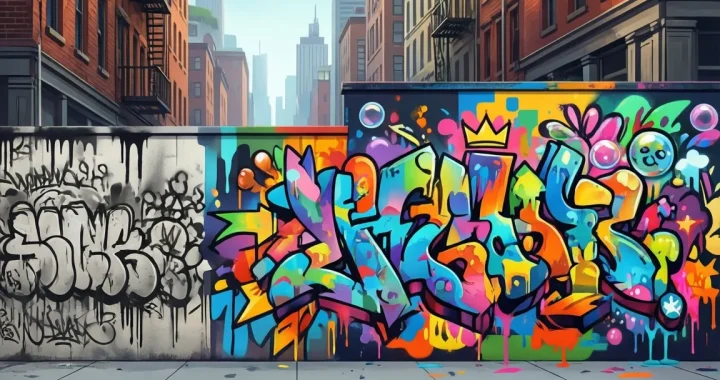
The Evolution of Graffiti: From Vandalism to Visual Culture
Graffiti moved from hurried tags on subway cars to pieces that hang in museums. You see the change in city walls, ads, and gallery shows. The shift happened through specific crews, laws, and new tools rather than any single moment.
New York subway years
In the early 1970s, writers like TAKI 183 covered train cars with marker tags. The goal was to get seen across boroughs before the train got cleaned. Paint stayed cheap and cans fit in backpacks.
- Markers for quick hits on station walls
- Thick caps for fat lines on the sides of cars
- Whole-car pieces that ran for weeks until buffed
Police and the MTA fought back with fenced yards and new cleaning chemicals. Writers adapted by painting faster and hiding work in tunnels.
Street to studio shift
By the 1980s some writers sold canvases. Keith Haring turned subway drawings into gallery shows. Jean-Michel Basquiat moved from SAMO tags to SoHo exhibitions. Galleries paid cash that walls never did.
Today you can walk into a legal wall in Berlin or Melbourne and paint without arrest. Cities run permit programs that list approved blocks and supply free paint on certain weekends. Check the local arts office site before you pack a bag.
Current tools and reach
Smartphones record every layer. An artist in São Paulo can post a wall at noon and see comments from Oslo by dinner. Brands now hire the same writers for campaigns that once chased them with fines.
| Old method | New method |
|---|---|
| Black book sketches | Tablet apps with layers |
| Train yards at 3 a.m. | Commissioned building sides |
| Word of mouth crews | Instagram location tags |
Some cities still treat unsanctioned tags as damage. Others treat the same mark as tourism draw. The line keeps moving with each new wall and each new law.